Why City Entrances So Often Face the Street
Why city entrances face the street: see how a doorway connects daily access to public life and signals where arrival, welcome and passage begin.
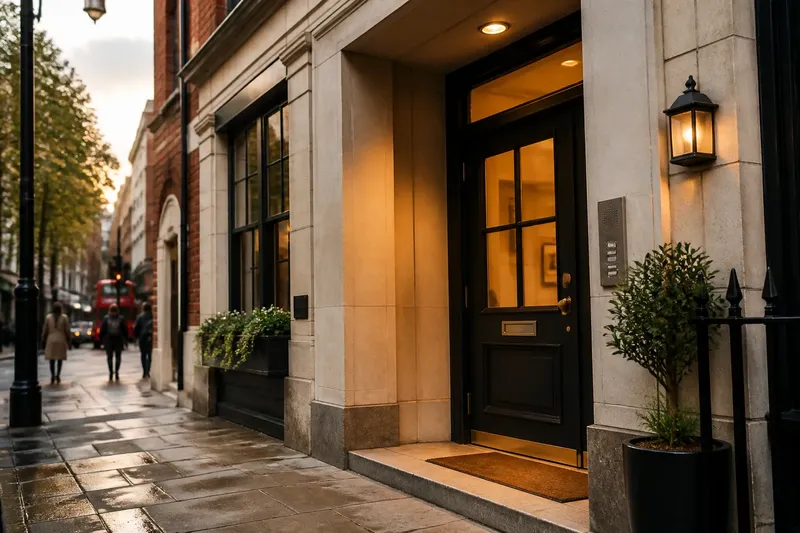
At a pavement’s edge, a recessed doorway can make a busy street feel briefly attentive: someone pauses, turns a key and steps inside. Why city entrances face the street is not only a matter of finding the front door. The entrance is where a private building meets shared public life, and its position helps make that meeting legible.
What does a street-facing entrance do?
A door opening directly onto the street gives a building a clear address in the daily scene. A visitor can approach from the pavement, read the entrance and enter without first crossing a car park, courtyard or service area. The route is understandable because the public way leads to the point of access.
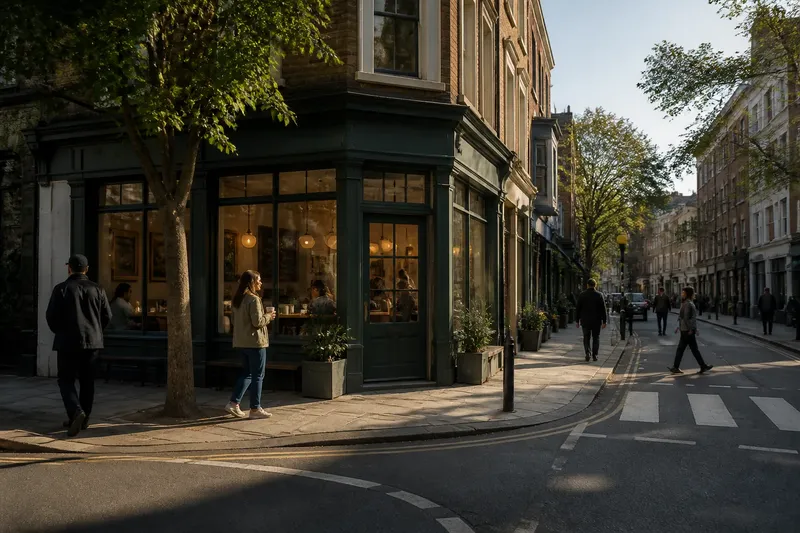
This arrangement also lets buildings take part in the street’s ordinary activity. A shop door may open onto a pavement; a flat entrance may place residents close to a bus stop or corner shop. Even where the interior remains private, the doorway gives the building a visible relationship with the city around it.
That relationship is not the same as constant openness. A closed front door still tells passers-by where the building’s main approach lies. The threshold makes a boundary clear while allowing people to cross it when invited or entitled to do so.
How does a threshold signal arrival?
The threshold is more than the door leaf. It can include a step, a shallow recess, a canopy, a change of paving or a small lobby visible through glass. Each element helps mark a transition from public pavement to the building’s interior, much as a doormat marks the edge of a room without stopping anyone.
These cues can answer practical questions before a visitor reaches the handle. Is this the main entrance or a staff door? Is there a sheltered place to wait? Does the door appear to open to the public, or does access require a key, buzzer or appointment?
Good signals need not be grand. A clear number, a visible handle and lighting that makes the approach readable can do more than an elaborate entrance hidden behind a blank wall. If the doorway sits back from the pavement, a short path or a change in surface can still make its route apparent.
Why not put every entrance behind the building?
Side or rear entrances can suit particular uses. Deliveries, refuse collection, vehicle access and staff circulation may need separate routes, while a building on a large plot may have a garden or forecourt between its walls and the street. The issue is not that these entrances are inherently wrong; it is what happens when the public entrance is difficult to find or reach.
A visitor sent around a building may encounter service gates, blank façades or unclear signs before locating the door. That can make an ordinary arrival feel uncertain, especially for someone unfamiliar with the place. A street-facing entrance shortens the explanation: the building meets the public route where its address suggests it should.
There are also reasons an entrance may not sit flush with the pavement. A setback can provide shelter or a moment to pause, and a raised threshold may relate to the building’s layout. The design question is whether the approach remains visible and usable, not whether every doorway must touch the street edge.
How do buildings make access clear for different people?
A legible entrance should communicate both location and permission. A shopfront with an open door signals a different kind of access from a residential lobby with a buzzer panel. Clear signs, a visible route and a door that can be approached without obstructing the pavement help people understand what is expected.
Access also includes the physical route. Steps may form part of an entrance, but an alternative step-free route should be apparent rather than hidden around a service side. Door hardware, turning space and the route from pavement to lobby all affect whether a person can use the entrance independently.
Where the right choice depends on a product label, manufacturer instructions or local rules, check those requirements and consult a qualified building professional where needed. The broader design aim is straightforward: make the public approach easy to identify, then make the transition into the building understandable.
What can a doorway tell you about a building?
Look at how the entrance meets the pavement, not only at its style. A doorway aligned with windows and signs may make a building’s use easy to read; a deep recess might offer shelter but obscure the door from a passing view. The surrounding details reveal whether arrival has been treated as part of the building’s public face.
Say a small library occupies a narrow street-front site and its entrance is set behind a short covered recess. If the door, opening hours and step-free route are visible from the pavement, the recess can offer a sheltered pause without making access mysterious. If the same recess hides the sign and leaves the accessible route unclear, the threshold asks visitors to solve a puzzle before they can enter.
What do people often ask about street-facing entrances?
Does a street-facing entrance make a building public?
No. It makes the point of approach visible, but access still depends on the building’s use, opening arrangements and the permission shown by signs or staff. A residential entrance can face a public pavement while remaining restricted to residents and their visitors.
Why are some entrances recessed from the pavement?
A recess can provide shelter, make room for a door to open or create a brief waiting space. Its success depends on whether people can still see where to go and whether the approach remains comfortable to use.
Should deliveries use the same entrance as visitors?
Not always. Separating deliveries from the public entrance can help a building manage different kinds of movement, particularly where goods or waste need their own route. The visitor entrance should nevertheless remain clear and easy to identify.
What makes an entrance feel welcoming?
People tend to read welcome through practical cues: a visible door, clear signs, a well-lit approach and an obvious way to ask for entry. Materials and decoration can contribute, but they cannot compensate for a route that is confusing or inaccessible.
Why does the street-facing door matter beyond convenience?
A front door gives a building a place in the shared view of the street. People entering and leaving add small signs of use; windows and doorways let the building address passers-by rather than presenting an uninterrupted wall. That does not mean every building needs a shopfront or public interior. It means its point of contact with the street can be clear even when access is limited.
So the reason city entrances face the street is both practical and civic: people need to find their way in, and the building needs a recognisable edge where public route becomes private interior. When that threshold is easy to read, arrival asks less effort of the visitor and gives the street a more intelligible account of what stands behind its frontage.